

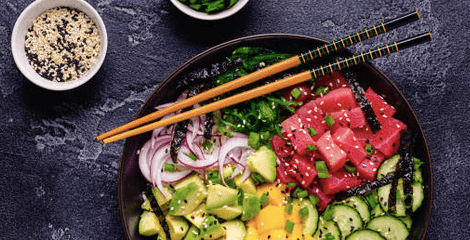
Poke 101: A Bite-Sized History
Poke History FAQ
Before it became a trendy bowl topped with rice and avocado, poke had deep roots in Hawaiian culture. This FAQ explores how a simple dish made from freshly caught fish evolved over time while still honoring its origins. Read on to learn where poke comes from and how it became the favorite we know today.
What does “poke” mean?
The word poke (pronounced POH-kay) comes from the Hawaiian language and means “to slice” or “to cut crosswise,” referring to the way the fish is cut into cubes.
Where did poke originate?
Poke originated in Hawaiʻi, where Native Hawaiians traditionally seasoned freshly caught fish with simple ingredients like sea salt, seaweed, and crushed kukui nuts.
When did people start eating poke?
Versions of poke have been eaten in Hawaiʻi for hundreds of years, long before modern refrigeration, as a way to enjoy fresh fish straight from the ocean.
How did poke change over time?
As different cultures settled in Hawaiʻi, poke evolved. Ingredients like soy sauce, sesame oil, onions, and chili peppers were introduced through Japanese, Chinese, and other Asian influences.
Was poke always served as a bowl?
No. Traditionally, poke was often eaten on its own or as a side dish. The modern poke bowl with rice and toppings became popular much later, especially outside Hawaiʻi.
When did poke become popular worldwide?
Poke gained global popularity in the 2010s, especially in the U.S., as people looked for fresh, healthy, and customizable meals inspired by Hawaiian cuisine.
Is tuna the only fish used in poke?
No. While ahi tuna is the most common today, traditional poke can be made with octopus (tako), salmon, or other local fish.
Drop us a line


Send a message

Always fresh.
Always on time.
Always CITY.
Helpful Links
